Long before written records were common, rhythm, rhyme, and musical accompaniment were the primary technologies for data storage. If you strip away modern production, a rapper spitting bars over a beat is tapping into the exact same cognitive mechanisms as our ancient ancestors. The techniques that make rap so effective for memorization—steady beats, rhyming couplets, and rhythmic flow—were used by almost every ancient civilization to preserve their histories, laws, and epic narratives.
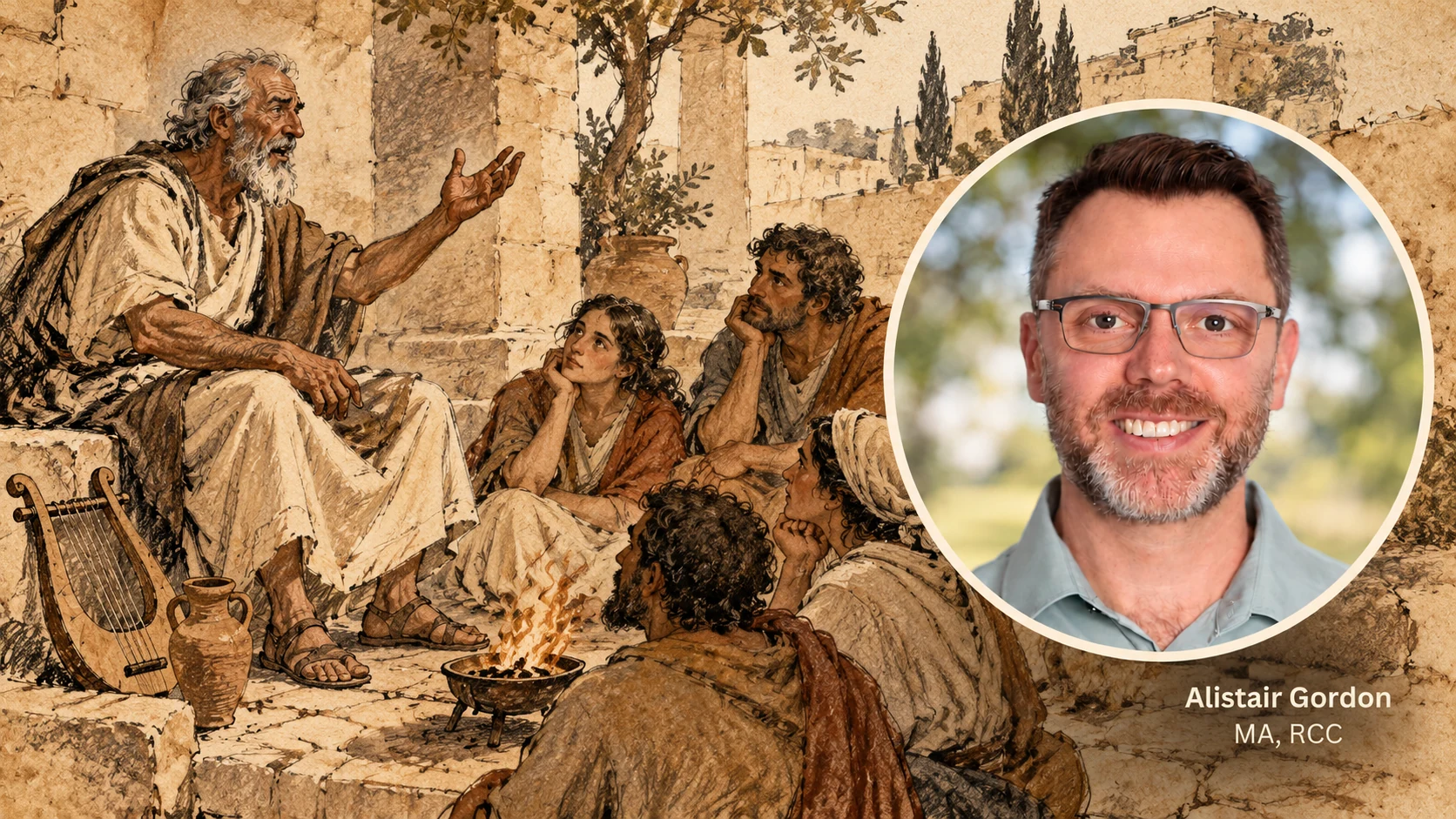
During the Han Dynasty, the ancient tradition of shuochang ("speaking and singing") saw performers reciting rapid, rhyming stories accompanied by the staccato beat of bamboo clappers. In West Africa, professional storytellers known as griots memorized complex genealogies over the steady, looping rhythm of a 21-string kora. In the ancient Mediterranean, Greek rhapsodes memorized tens of thousands of lines of epic poetry by chanting in strict rhythmic meter, using repeating phrases—"epithets"—like a hook in a modern song to cue up the next verse.
These oral traditions engineered data to perfectly match the neurological hardware of the human brain. They exploited our evolutionary biases for spatial awareness, social drama, and acoustic resonance.
Written literacy fundamentally changed our cognitive architecture. It allowed us to outsource our memory to paper, but it severely degraded our internal retention. Modern learning became external, static, and abstract—relying on the visual processing of symbols detached from context.
But when it comes to deep psychological change and rewiring the brain, we need to return to our evolutionary roots. The mind does not heal or transform through static, abstract information. It changes through processes that are internal, dynamic, and embodied.
Here is how these ancient memory hacks apply directly to the therapeutic process, neuroplasticity, your own self-development, and how you teach the next generation.
1. Neuroplasticity and the Therapy Change Process
Neuroplasticity is the brain’s ability to reorganize itself by forming new neural connections. The fundamental rule of neuroplasticity is: Neurons that fire together, wire together. But for those neurons to fire consistently enough to create lasting change, the brain requires rhythm, repetition, and emotional resonance.
At Wellspring Counselling & Psychotherapy, we recognize that simply "knowing" why a client is anxious or stuck is rarely enough to create change. That is abstract, written-word learning. True therapeutic change mimics the ancient oral traditions:
The Power of the "Epithet" in Therapy: Just as Greek bards used repeating phrases to anchor their stories, effective therapy utilizes specific, repeating language to anchor new insights. In CorMorphosis™ Psychotherapy, for example, we standardize core terminology for a client's internal experiences. By naming a specific emotional trigger or a core protective mechanism and using that exact name repeatedly, we create a cognitive "hook." When the trigger arises in real life, the brain quickly catches the hook, pausing the automatic reaction.
Narrative Restructuring: Ancient Chinese strategists passed down complex tactics by wrapping them in the character-driven drama of the Romance of the Three Kingdoms. In therapy, we don't just analyze isolated symptoms; we externalize them into a narrative. By mapping out internal parts or behavioral patterns as characters in a broader story, the client's brain can process trauma and change safely and dynamically.
Rhythmic Regulation: Trauma and anxiety disrupt the nervous system's natural rhythm. In session, slowing down, focusing on the rhythmic pace of breathing, and pacing the therapeutic dialogue helps the nervous system co-regulate. The brain requires the safety of rhythm to unlock its capacity for deep, structural learning.
2. Priming the Brain for Personal Self-Development
If you are trying to learn a new skill, shift a habit, or engage in personal growth, relying on abstract willpower—like reading a self-help book and expecting instant change—usually fails. You must make the learning match your biological hardware.
To engage in self-development the way your brain was built to learn:
Create Mental Hooks (Rhyme and Repetition): Instead of a vague goal like "I want to be less reactive," distill your goal into a short, rhythmic phrase or a personal "epithet." Repeat this exact phrase during your morning routine or right before entering a stressful environment. The rhythm creates a predictable groove in your neural pathways.
Anchor Your Learning Spatially: Just as ancient historians used physical spaces or tactile boards to map out history, map your personal growth goals to your physical environment. Dedicate a specific chair only for reading or reflection. Connect a new mindset shift to a specific part of your daily commute. Spatial anchoring makes abstract concepts physical.
Turn Concepts into Stories: If you are trying to learn about your own mind, stop trying to memorize psychological terms. Look at your life as an unfolding narrative. When you experience a setback, frame it as a necessary plot point—the "inciting incident" or the "dark night of the soul"—rather than a failure. The brain remembers and integrates stories far faster than spreadsheets or lists of goals.
3. Passing Knowledge to the Next Generation
For clients navigating parenthood, translating these clinical and historical frameworks into a teaching method for children is incredibly powerful. A child’s developing brain—especially around age seven—is highly plastic and naturally wired to absorb information through play, rhythm, and imaginative narrative. To pass down knowledge effectively, we must move away from abstract explaining and lean entirely into experiencing.
Create "Epithets" for Emotional Regulation: Instead of giving abstract lectures about values or patience, create short, rhythmic catchphrases. If you want to teach resilience, establish a standardized family epithet. When a block tower falls or a project goes wrong, use the exact same phrase every time—such as, "We break it down, we build it back." This gives the child's brain a reliable cognitive hook that eventually pauses the automatic frustration response before it spirals.
Tap into Musical Rhythm for Hard Data: To teach concrete information—whether math, science, or history—put it to a physical beat. Tap into the sense of tempo a child might develop in early piano lessons or playground clapping games. Group the information into rhythmic chunks of three or four syllables. When a child learns to associate data with a physical downbeat, the body remembers what the mind might forget.
Wrap Lessons in Character-Driven Drama: When reading history together, avoid focusing on dates or abstract shifts in power. A young brain operates on social drama. Turn historical figures into vivid characters with distinct, exaggerated traits. Make a general's tactical retreat or a king's alliance feel like a story about friends and rivals navigating a playground. The character narrative becomes the Trojan Horse for the deeper lesson.
Build a Spatial Memory Palace: Translate ancient memory boards into a physical game around the house. If you are teaching a sequence of events, map it to the rooms in your home. The front door is the beginning, the hallway is the rising conflict, and the living room is the resolution. Have the child physically walk from room to room as they recount the knowledge. By moving the body through space, abstract knowledge is anchored to a tangible environment.
We are biologically wired to heal, adapt, and grow when information is brought to life. By moving away from rigid, abstract thinking and embracing the natural rhythms and narratives of the mind, we can actively shape our own neuroplasticity—and foster it in the generations that follow.